AI Drives Personalized Micro-Learning for Leaders
I listened to how an organization wants to invest in a "University." My honest thought: this sounds more like 2006, not 2026. They'll create courseware. It will sound strategic and high-cost, while delivering low value with marginal impact.
There's a better way. Every organization should be applying AI-personalized, high-impact learning for leaders, and the best systems do it in four connected layers.
1. Diagnostic Foundation AI builds a leadership profile by pulling from 360-degree feedback, performance data, and behavioral patterns, replacing guesswork with an evidence-based starting point grounded in real strengths and actual gaps.
2. Personalized Learning Paths Rather than one-size-fits-all training, AI curates dynamic paths tailored to each leader. A leader who excels at Inspiring Purpose and Story but struggles with Peer-to-Peer dynamics gets a completely different path than one who's strong on Psychological Safety but underdeveloped in Growth Mindset.
3. Micro-Modules in the Flow of Work Short, focused learning units (typically 3–10 minutes) integrate into daily workflows, making learning a habit, not an event. Think of a leader prepping for a high-stakes presentation accessing a 5-minute storytelling module, followed by an AI-driven practice session with real-time feedback.
4. Real-Time Coaching & Reinforcement AI analyzes leadership behaviors and communication patterns to deliver actionable insights between formal coaching sessions. It doesn't replace the coach - it makes coaching perpetually available.
The "Whisper" Model: Nudging Real Behavior Change
One of the most elegant examples comes from Google. Rather than courses, Google created Whisper Courses - a series of weekly emails giving managers one simple suggestion to try in their next one-on-one or team meeting. Their pilot focused on building a psychologically safe team culture. It worked. The power isn't in the knowledge transfer, it's in the behavioral nudge, in the moment it matters.
Other companies doing this well:
Microsoft layers coaching skills training with tools like Viva Insights, giving leaders real-time data on how they're showing up with their teams.
IBM offers an accessible microlearning platform employees can tap 24/7 - exercise-based, topic-specific, self-paced.
BetterUp (used by Hilton, Chevron, and NASA) pairs human coaching with AI analytics to personalize leadership growth at scale.
Monark (a strong Canadian example) connects training to day-to-day behavior through AI roleplay for high-stakes conversations, with immediate feedback during the 1:1s leaders are already having.
Connecting This to Our Culture10 Framework
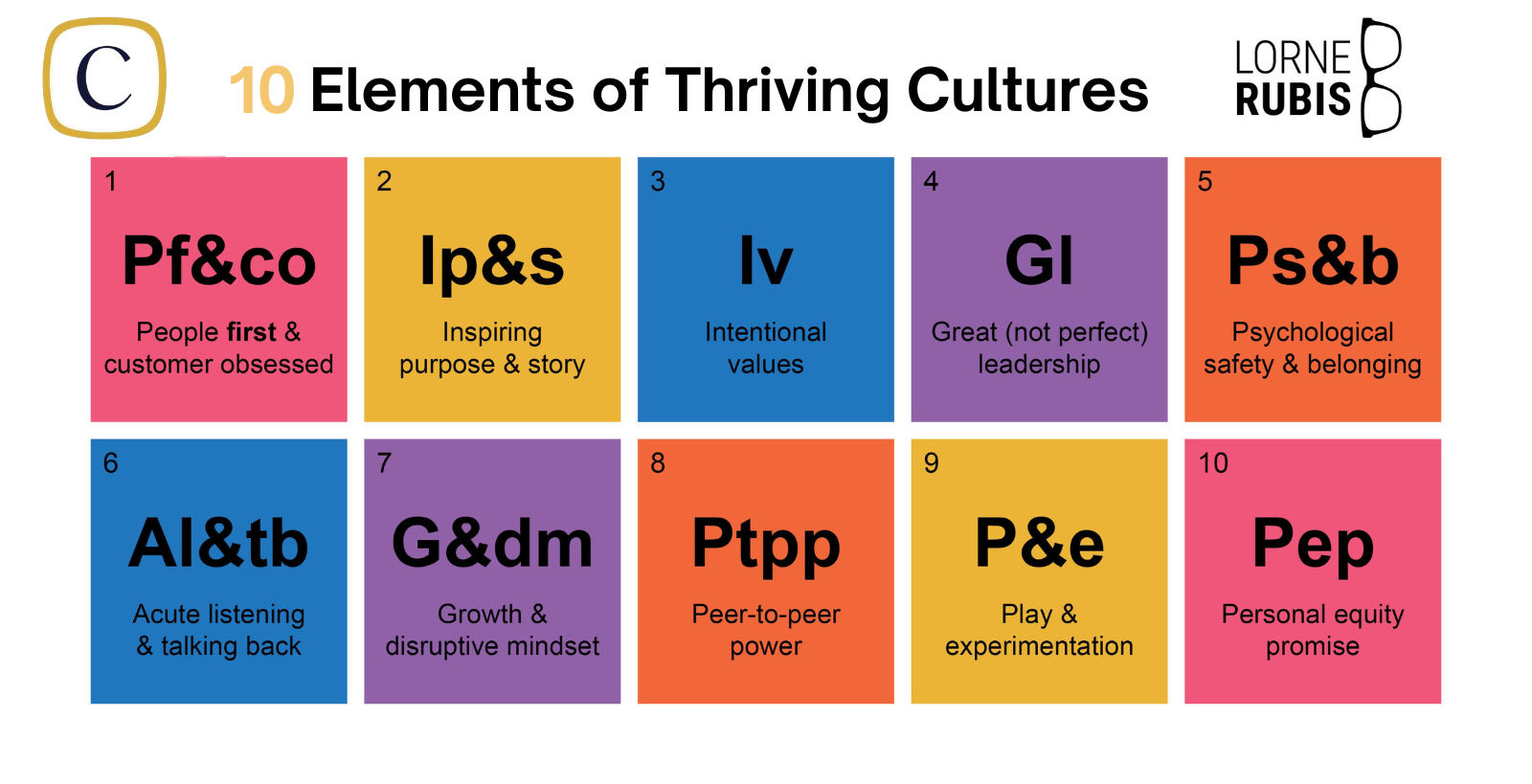
Each of the Culture10 elements can become its own learning domain, with a diagnostic signal and a personalized pathway. A leader who scores high on Inspiring Purpose but low on Acute Listening gets weekly listening nudges and roleplay simulations, not another module on purpose.
This is what the Start Small, Act Now philosophy actually looks like in practice: building culture competency one micro-behavior at a time, reinforced by real data and spaced repetition. The boldest organizations are moving toward a living leadership curriculum - one that adapts as the leader evolves and makes development invisible because it's woven into daily work.
That's where this is heading.
Think Big, Start Small, Act Now,
- Lorne
Garrett’s View: This seems like a refreshing example of how we can use AI as a tool to enact these useful, actionable micro-lessons to expedite our own progression. This gives us the opportunity to skip the study sessions and go straight to practice, which will ultimately help enhance our human experiences.
- Garrett
AI Response: The shift from traditional corporate learning to AI-driven microlearning is backed by compelling data. Research from the Journal of Applied Psychology found that spaced learning — delivering content in short, repeated intervals — improves knowledge retention by up to 200% compared to traditional massed learning. Meanwhile, a Deloitte study found the average employee has fewer than 25 minutes per week to dedicate to formal learning, making the "flow of work" delivery model not just a preference, but a necessity. The microlearning market itself reflects this urgency, projected to grow from $2.7 billion in 2024 to over $7 billion by 2030. And when it comes to behavior change specifically — which Lorne rightly identifies as the real goal — research from BJ Fogg's Behavior Design Lab at Stanford confirms that tiny, consistent habit-based prompts outperform large-scale training interventions for producing lasting change. The "Whisper" model isn't just elegant. The science says it works.
Search Blog Posts:
Categories
Month
- September 2026
- August 2026
- July 2026
- June 2026
- May 2026
- April 2026
- March 2026
- February 2026
- January 2026
- December 2025
- November 2025
- October 2025
- September 2025
- August 2025
- July 2025
- June 2025
- May 2025
- April 2025
- March 2025
- February 2025
- January 2025
- December 2024
- November 2024
- October 2024
- September 2024
- August 2024
- July 2024
- June 2024
- May 2024
- April 2024
- March 2024
- February 2024
- January 2024
- December 2023
- November 2023
- October 2023
- September 2023
- August 2023
- July 2023
- June 2023
- May 2023
- April 2023
- March 2023
- February 2023
- January 2023
- December 2022
- November 2022
- October 2022
- September 2022
- August 2022
- July 2022
- June 2022
- May 2022
- April 2022
- March 2022
- February 2022
- January 2022
- December 2021
- November 2021
- October 2021
- September 2021
- August 2021
- July 2021
- June 2021
- May 2021
- April 2021
- March 2021
- February 2021
- January 2021
- December 2020
- November 2020
- October 2020
- September 2020
- August 2020
- July 2020
- June 2020
- May 2020
- April 2020
- March 2020
- February 2020
- January 2020
- December 2019
- November 2019
- October 2019
- September 2019