
Built to Last: What Ancient Athens Can Teach the Modern Workplace
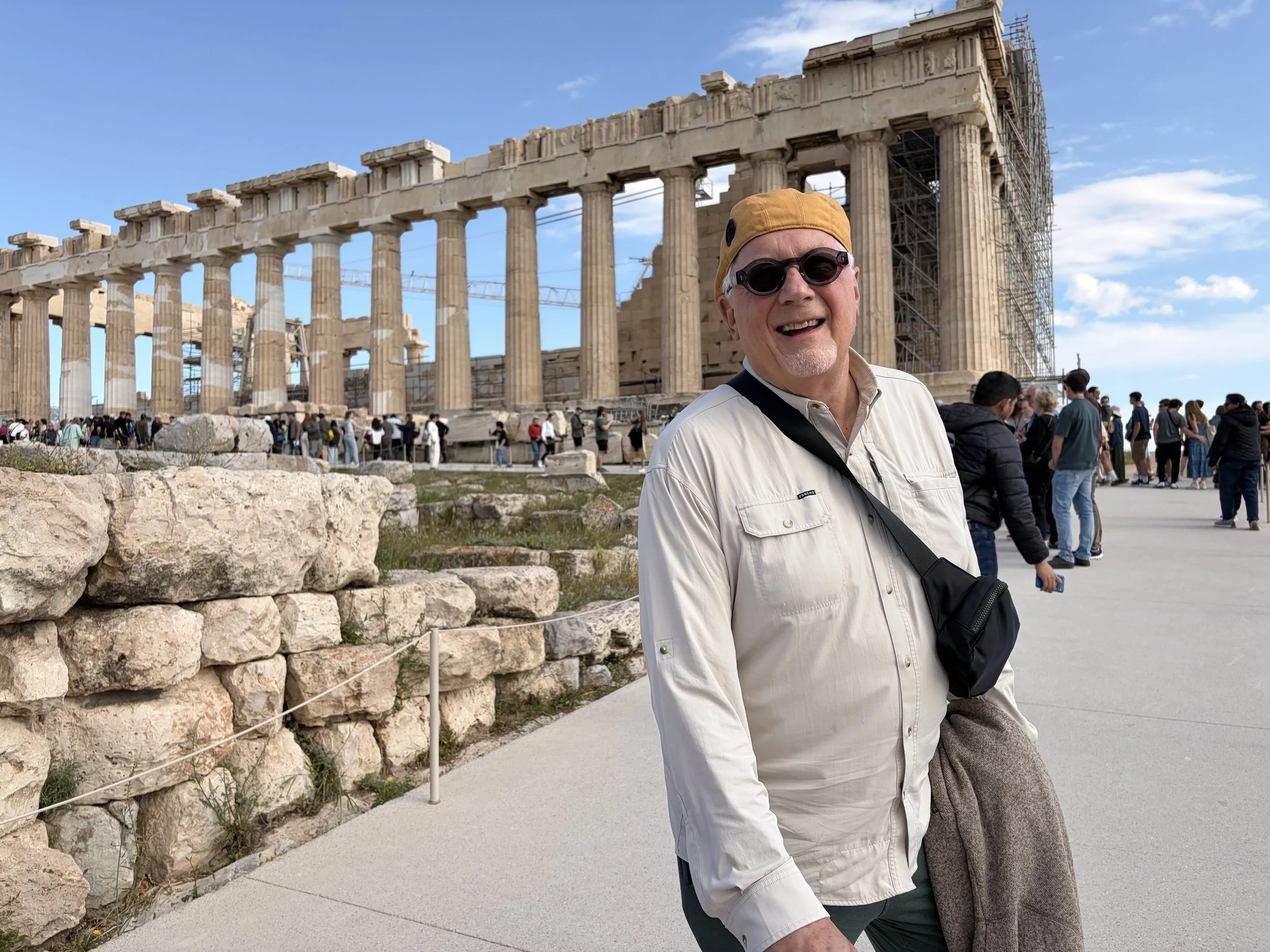
Standing in the middle of the Acropolis is literally breathtaking. One can’t help but marvel at the craft and work involved. As a student of work and culture, I wondered about the significance and relevance of something so enduring to today’s work.
At first glance, the Acropolis of Athens and modern work seem worlds apart. One is an ancient hill crowned with temples, the other a landscape of emails, deadlines, and digital tools. But the connection runs deeper than what appears on the surface.
A Symbol of Purposeful Creation
The Acropolis, especially the Parthenon, wasn’t just built for function, it was built with intention, precision, and a vision of excellence. Every column, proportion, and detail reflects a commitment to craftsmanship.
Modern work, at its best, carries the same idea: not just completing tasks, but building something meaningful. Whether you’re coding, designing, teaching, or managing, the deeper question echoes the ancient builders: what are you really creating, and why does it matter?
Collaboration Across Generations
The Acropolis wasn’t the work of one person. It took architects like Phidias, laborers, artists, and planners, all collaborating over years.
That mirrors modern organizations and projects. Great work rarely happens in isolation. Teams, like those ancient builders, combine different skills toward a shared goal. The difference today is speed; the similarity is dependence on collective effort.
Legacy Beyond the Immediate
The builders of the Acropolis knew they were creating something meant to endure. And it has! Over 2,400 years later, it still stands as a symbol of human achievement.
Modern work often feels temporary or transactional, emphasizing projects, quarterly goals, and shifting priorities. But the deeper connection is this: the most meaningful work isn’t just about immediate output; it’s about lasting impact.
It may seem frivolous to compare modern work output to the Parthenon, but the mindset of building something that outlives the moment can transform how we approach work.
What’s Next?
Additionally the relevance of Greek philosophers and democratic principles symbolized in part by the Acropolis, are germane to our current race to employ agentic AI. Surely this next evolution of work and humanity is more than the narrow path of profit maximization for shareholders.
What are we doing today that people will marvel at 2,400 years from now? It will ideally not be how we replaced work but how we transformed work to make lives better for all.
Ideally, purposeful creation, respectful collaboration and legacy that advances humankind, as inspired by the Acropolis, will guide us forward in the best way!
Think Big, Start Small, Act Now
- Lorne
Garrett’s View: While I think it’s safe to admit we haven’t sent every email with the precision considered when sculpting Pentelic marble, the intention for lasting impact transcends ancient and modern thinking. In a world wired for the immediate, legacy can feel almost presumptuous. Why? We cherish things that are built to last, it’s in our ancestry.
- Garrett
AI Response: Gallup's latest State of the Global Workplace report found that global employee engagement fell to just 21% in 2024, and dropped further to 20% in 2025, costing the world economy an estimated $10 trillion in lost productivity. The ancient builders of the Parthenon worked under a civic mandate — their output was explicitly for posterity. Today, most workers are struggling to find that same north star. McKinsey research offers a corrective: companies oriented toward long-term growth generated shareholder returns 80 to 110 percent greater than bottom-third peers over a ten-year period — suggesting that the mindset of building something that endures isn't just noble, it's measurably effective. Purposeful creation and legacy thinking aren't idealistic relics of antiquity. They're a competitive advantage.
Search Blog Posts:
Categories
Month
- October 2026
- September 2026
- August 2026
- July 2026
- June 2026
- May 2026
- April 2026
- March 2026
- February 2026
- January 2026
- December 2025
- November 2025
- October 2025
- September 2025
- August 2025
- July 2025
- June 2025
- May 2025
- April 2025
- March 2025
- February 2025
- January 2025
- December 2024
- November 2024
- October 2024
- September 2024
- August 2024
- July 2024
- June 2024
- May 2024
- April 2024
- March 2024
- February 2024
- January 2024
- December 2023
- November 2023
- October 2023
- September 2023
- August 2023
- July 2023
- June 2023
- May 2023
- April 2023
- March 2023
- February 2023
- January 2023
- December 2022
- November 2022
- October 2022
- September 2022
- August 2022
- July 2022
- June 2022
- May 2022
- April 2022
- March 2022
- February 2022
- January 2022
- December 2021
- November 2021
- October 2021
- September 2021
- August 2021
- July 2021
- June 2021
- May 2021
- April 2021
- March 2021
- February 2021
- January 2021
- December 2020
- November 2020
- October 2020
- September 2020
- August 2020
- July 2020
- June 2020
- May 2020
- April 2020
- March 2020
- February 2020
- January 2020
- December 2019
- November 2019
- October 2019
- September 2019