
The War Between Connection and Disconnection
A few minutes into almost every Connect Before Content circle, something shifts in the room.
We set the agenda aside for a moment, and people share something real about who they are and what matters to them. Defenses drop. Colleagues who have worked side by side for years discover a shared story, struggle or hope.
What happens in those circles is bridging and aligning. Bridging is finding common ground across differences. Aligning is pointing that common ground at a purpose you’re building together. Both are learnable, both are repeatable, and both are far more powerful than most leaders realize.
So why is it so hard?
Nearly every leader I work with tells me their people want to belong. They want to be known, to matter to someone, and to do good work alongside people they trust. Then, often in the same conversation, they tell me their teams feel fragmented, guarded and worn out.
If we want connection that badly, why do we keep losing it?
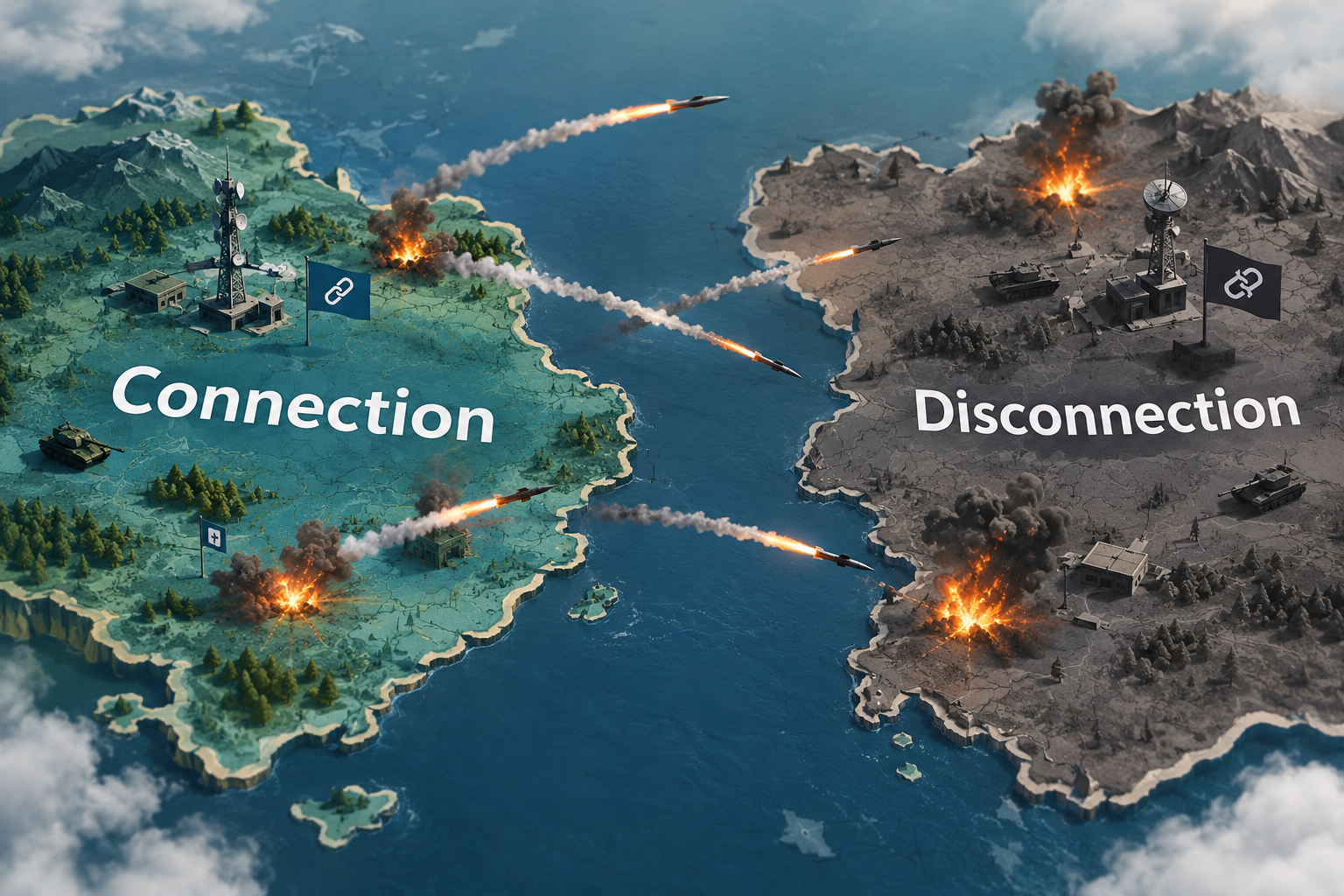
I’ve come to think of it as a war. It’s a quiet, everyday one. One side pulls us toward each other, and the other pulls us apart. The side that wins usually isn’t the one that wants it more. It’s the one that’s better organized. Right now, disconnection is very well organized.
Start with the phone in your pocket. The apps most of us scroll at night are built to keep us there, and nothing keeps us there like outrage. The sharpest take gets rewarded and the generous one gets buried. Do that long enough and the person who sees the world differently stops looking like a neighbor and starts looking like an opponent.
Then there’s lonely screen time. We’re technically connected all day and relationally starved. Plenty of people get through an entire workday on camera, on chat and in their inbox without one conversation that leaves them feeling known.
Finally, there’s othering. Once we sort people into us and them, curiosity goes out the window. At work it looks like silos, cliques, remote versus office, head office versus the field, and unspoken assumptions about who belongs in the room.
Nobody has to be a villain for any of this to happen, and that’s what makes it so sneaky. Disconnection is the default setting. Connection is something you have to choose.
Work is the front line
For a lot of adults, work is the last place they spend real time with people who aren’t like them. Neighborhoods, service clubs and community leagues don’t pull people together the way they used to. Work still does.
That makes work one of two things. It can be one more place where people feel anonymous and keep their guard up. Or it can be where they practice the habits of connection the rest of the culture is forgetting. I’d argue the second path is good for people and good for business. Teams that know each other disagree better, bounce back faster and take smarter risks.
A few places to start
None of this needs a big program. It takes small, consistent choices that make connection the easier path. Here’s where I’d begin:
Connect Before Content. Open meetings with a short human moment before the agenda. Five minutes of genuine check-in buys you candor and speed for the rest of the hour.
Make it a rhythm, not an event. One offsite a year won’t undo 50 weeks of transactional meetings. Build Connect Circles into how your team works so they stop feeling like something extra.
Bridge, don’t just bond. Bonding with people like us is comfortable. Bridging with people unlike us is where trust and new ideas come from. Mix teams across functions, levels and locations on purpose.
Name othering when you see it. When someone dismisses a group with a label, get curious instead of letting it slide.
Make technology serve the relationship. Use tools that make it easier to meet, recognize and understand each other, not ones that replace those things. AI should help us be more human, not less.
Of the five, your own behavior as a leader matters most. People watch what you do far more closely than what you say.
Choosing connection
Disconnection isn’t going to retreat on its own. It’s built into our devices, our feeds and our habits. But the need to connect is older and deeper than any algorithm. When leaders create the conditions, people step toward each other almost every time.
Choosing connection means slowing down, staying curious about the people who frustrate us, and showing up as a human first. It means doing what is difficult.
So I’ll ask you: what’s one practice in your workplace that pulls people together, and one that quietly pushes them apart? I’d love to hear what you’re seeing.
How can leaders reduce loneliness and build real connection on their teams, especially hybrid or remote ones?
Think Big, Start Small, Act Now
Lorne
Garrett’s View: What if every time you showed up somewhere in real life (church, the community center, a neighborhood potluck, your rec league, or heck, your local bar), your Connect Score ticked up? And every time you got outraged online or fired off a nasty comment, it ticked down? No prizes, no penalties, and nobody else ever sees it. It’s just your number. What would yours look like right now? And what would you want it to be?
- Garrett
AI Response: The data backs up Lorne’s argument. According to Gallup’s State of the Global Workplace 2024 report, one in five employees worldwide said they felt lonely a lot of the previous day, and work location showed the biggest gap: 25% of fully remote employees reported loneliness versus 16% of fully on-site workers, with hybrid at 21%. Gallup also found that employees who felt their opinions mattered at work were 39 percent less likely to be lonely. That supports Lorne’s point that being known and heard is the antidote. The stakes go beyond morale. The 2023 U.S. Surgeon General’s advisory found that social disconnection raises the risk of dementia by 50%, stroke by 32% and heart disease by 29%, and carries a premature-death risk comparable to smoking 15 cigarettes a day. The same report backs up his “lonely screen time” point: Americans spent about 20 minutes a day in person with friends in 2020, down from 60 minutes nearly two decades earlier, and people using social media two or more hours a day were more than twice as likely to report feeling socially isolated.
Search Blog Posts:
Categories
Month
- October 2026
- September 2026
- August 2026
- July 2026
- June 2026
- May 2026
- April 2026
- March 2026
- February 2026
- January 2026
- December 2025
- November 2025
- October 2025
- September 2025
- August 2025
- July 2025
- June 2025
- May 2025
- April 2025
- March 2025
- February 2025
- January 2025
- December 2024
- November 2024
- October 2024
- September 2024
- August 2024
- July 2024
- June 2024
- May 2024
- April 2024
- March 2024
- February 2024
- January 2024
- December 2023
- November 2023
- October 2023
- September 2023
- August 2023
- July 2023
- June 2023
- May 2023
- April 2023
- March 2023
- February 2023
- January 2023
- December 2022
- November 2022
- October 2022
- September 2022
- August 2022
- July 2022
- June 2022
- May 2022
- April 2022
- March 2022
- February 2022
- January 2022
- December 2021
- November 2021
- October 2021
- September 2021
- August 2021
- July 2021
- June 2021
- May 2021
- April 2021
- March 2021
- February 2021
- January 2021
- December 2020
- November 2020
- October 2020
- September 2020
- August 2020
- July 2020
- June 2020
- May 2020
- April 2020
- March 2020
- February 2020
- January 2020
- December 2019
- November 2019
- October 2019
- September 2019