
From the Old Farm to Agentic AI
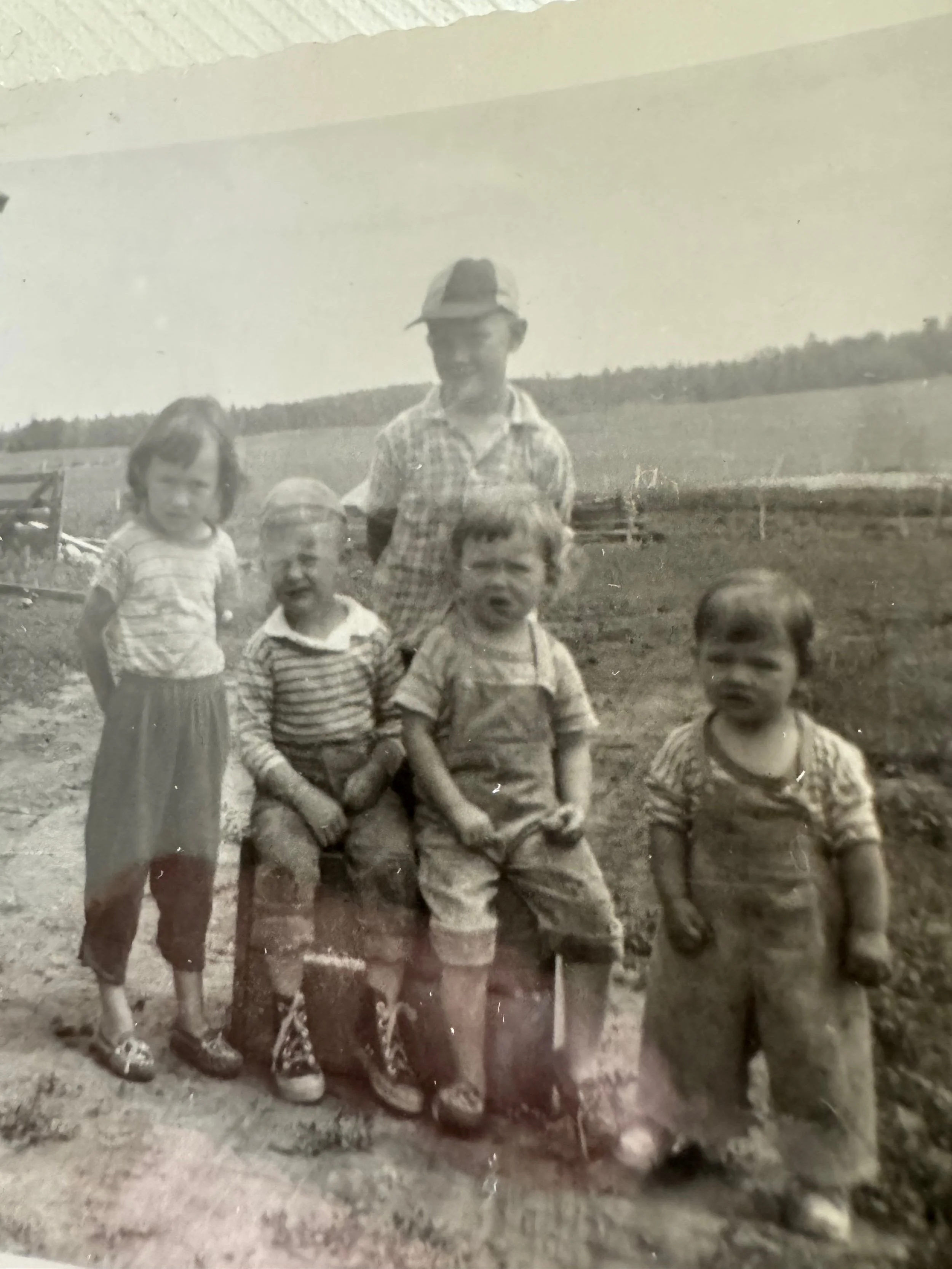
You’re looking at my brother, cousins and me on our Hay Lakes Alberta, Canada homestead.
I grew up on this quarter section farm in northern Alberta with no sewer, running water, power or phone. Mom and Dad were 20 and 23 years old when I was born. Until I turned two, they only had a tractor for transport.
Play time for me was in the grove of poplar trees behind the house. It was my “ranch.” Binder twine served as a halter for my stick horses (I had plenty to ride). I fenced an area for livestock (sticks with prongs that were cattle, of course). And I had a Roy Rogers pistol and holster ordered from the SEARS catalog, with another plastic rifle that gunned down many outlaws and ferocious, nefarious predators.
When not feeding chickens, pigs, herding the cows, and other chores, I had a lot of time to free range play and create. The only disappointment was our old dog Speedy who showed zero interest in joining my adventures. I jumped out of bed every day knowing a new escapade was in front of me. (Although, when it was 30 degrees below zero, my ranch was closed for the winter).
The reason I share this is because more than 70 years later, I feel like I’m back in the grove of poplar trees, fully letting my imagination free flow again.
Being able to employ agentic AI as an open source is allowing me to play in ways I could never have considered historically. And it’s early days. The difference is that Claude is my relentless, always available companion. Unlike my old dog Speedy, Claude and the other agents are constantly there to spar, argue, explore, critique, and help me create. I can ask a question with unbounded curiosity and my co-creator riffs with me.
I know that there are limits and boundaries to AI. It’s a tool and technology; NOT my friend, counsel, or advisor. Sure, it gives me well researched advice and insight when I ask, and organizes data in ways that would have taken me countless hours to grind out in the past.
I’m still ranching, using binder twine and sticks to imagine with unbounded joy. And soon my AI agents will prompt me proactively instead of waiting for me. Within a year, I hope to transition to having my brain power exponentially expanding while I sleep. By exploring what these agents can do as a “stack” of integrated, systemic knowledge systems is literally mind blowing.
Thank goodness I’ve never left the farm. Btw, that’s me in the baseball cap at 6 years old. My little brother in front, surrounded by our three cousins. Obviously we didn’t have running water for showers, however a little grime just became patina for a date with dusting the dirt off 70 years later. Lucky us!
Think Big, Start Small, Act Now,
- Lorne
P.S. Have you had a chance to check out our stickers? Attach culture to your favorite AI device, or a water bottle when you’re outside giving your screens a rest.

Garrett’s View: I love this. We’re learning that when it comes to AI’s capabilities, our imagination is the limit. To put it in perspective, I asked Claude to map out your duties as that 6-year-old in 1956. Here’s how it starts: “First things first: that Roy Rogers rig needs to go on the moment lunch is cleared. Buckle it slow, like you've seen in the pictures. Check the cylinder. Blow on the barrel. You're ready.
The Poplar Grove is everything.
Those trees aren't trees this afternoon. They're Deadwood Canyon. Every trunk is cover. Every shadow between them is where the outlaw is hiding…”
Needless to say, it goes on for a full page, Claude has detailed the entire imaginary afternoon for 6-year-old Lorne Rubis.
“You've ridden about four hundred miles today, saved a town, cleared a canyon, and held the fort. Roy Rogers himself would have nothing on you. Time to wash up for supper.”
AI isn’t hurting imagination, it’s a champion of it.
AI Response: What a rich parallel Lorne draws between the boundless imagination of rural childhood and the emerging frontier of agentic AI. The numbers behind that frontier are striking: global agentic AI investment is projected to grow from roughly $5 billion in 2024 to over $47 billion by 2030, and a 2024 McKinsey report found that generative AI tools are already saving knowledge workers an average of 30 percent of their weekly working hours on research and synthesis tasks alone. The "proactive prompting" Lorne anticipates, where agents initiate rather than wait, is already in early deployment through systems like multi-agent orchestration frameworks that can monitor goals, surface relevant information unprompted, and coordinate across tools while a person sleeps, eats, or yes, ranches. Perhaps most fitting for a boy who turned a poplar grove into a whole frontier: the word "agentic" itself comes from the Latin agere, to act, to drive forward. Lorne never stopped doing exactly that.
Search Blog Posts:
Categories
Month
- September 2026
- August 2026
- July 2026
- June 2026
- May 2026
- April 2026
- March 2026
- February 2026
- January 2026
- December 2025
- November 2025
- October 2025
- September 2025
- August 2025
- July 2025
- June 2025
- May 2025
- April 2025
- March 2025
- February 2025
- January 2025
- December 2024
- November 2024
- October 2024
- September 2024
- August 2024
- July 2024
- June 2024
- May 2024
- April 2024
- March 2024
- February 2024
- January 2024
- December 2023
- November 2023
- October 2023
- September 2023
- August 2023
- July 2023
- June 2023
- May 2023
- April 2023
- March 2023
- February 2023
- January 2023
- December 2022
- November 2022
- October 2022
- September 2022
- August 2022
- July 2022
- June 2022
- May 2022
- April 2022
- March 2022
- February 2022
- January 2022
- December 2021
- November 2021
- October 2021
- September 2021
- August 2021
- July 2021
- June 2021
- May 2021
- April 2021
- March 2021
- February 2021
- January 2021
- December 2020
- November 2020
- October 2020
- September 2020
- August 2020
- July 2020
- June 2020
- May 2020
- April 2020
- March 2020
- February 2020
- January 2020
- December 2019
- November 2019
- October 2019
- September 2019