
When is it Too Late to Say ‘Thank You?’
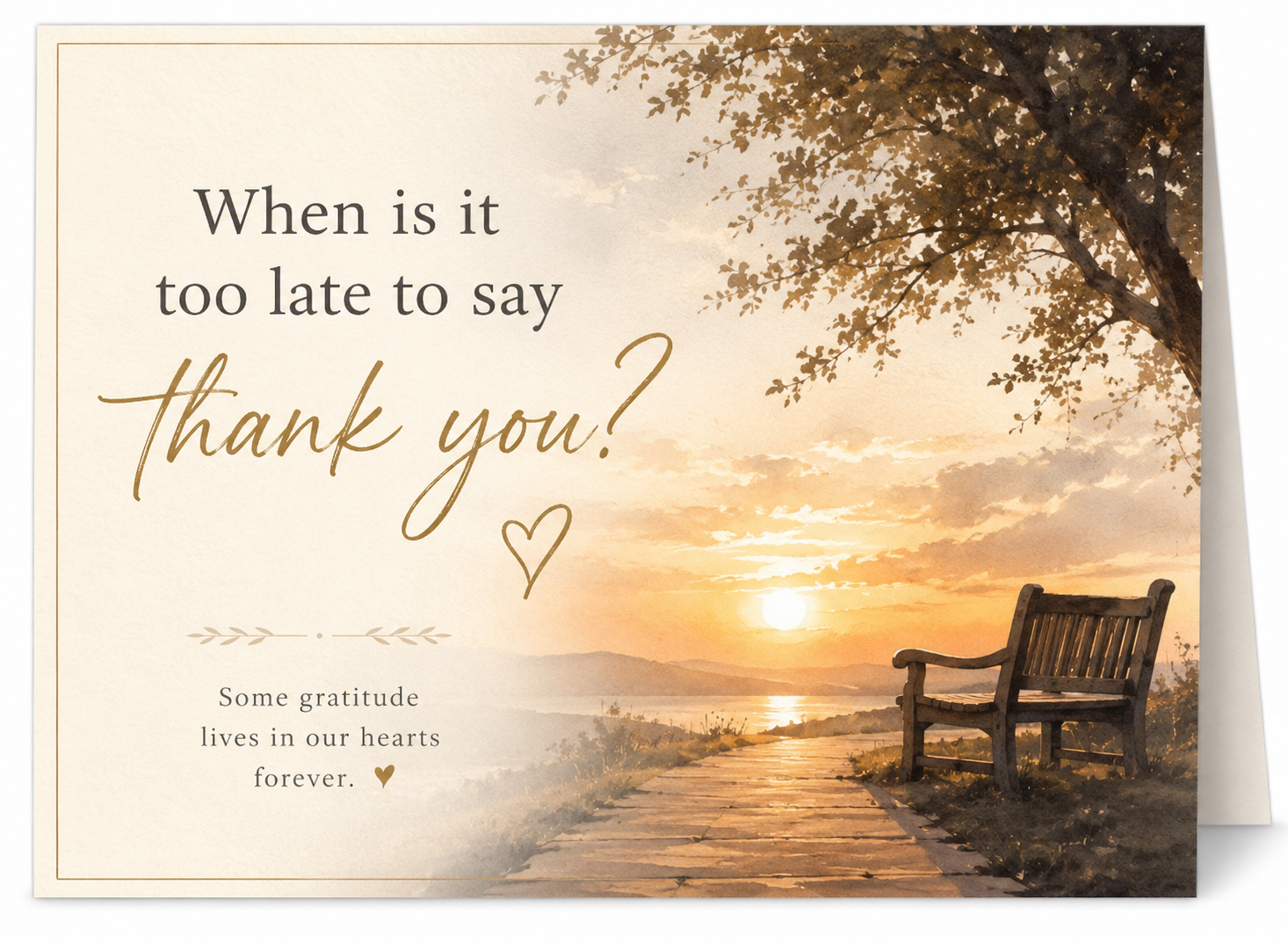
Mother’s Day. Hmm. I wonder if I have thanked my Mom often enough for all that she’s done for me throughout the ups and downs of our life together? I honestly don’t know if there is a sufficient quotient. Nor would she expect one. She’s 96 and we have to embrace all those “thank you” moments that matter, whether big, small or in between.
It’s never too late to add genuine thank yous into a relationship, even with your Mom. Saying thank you doesn’t get old, stale or deteriorate. Gratitude becomes connective tissue that compounds growth and binds a relationship.
I also feel that sincere thank yous are abundant currency. Our “thank you” bank account, unlike hard cash, is infinite. And for me, giving acknowledgment is independent of matching or reciprocating.
This week I’m sending a tangible thank you to someone I worked with 30 years ago. He helped me in ways that I never fully appreciated until reflecting on the situation much later.
The timing may not be perfect, but sincerity usually matters more than punctuality. In many cases, a delayed thank you can feel especially meaningful because it shows that the appreciation stayed with you long after the moment passed. I hope he feels that way.
It also says something important about growth: sometimes people only fully understand the value of help, love, sacrifice, or support much later. Expressing gratitude when that realization arrives is better than never saying it at all.
I even wonder if there might be some room for a historical gratitude audit? Not to assuage guilt but to color in a few incomplete spaces in relationships important to us? The value is in the authenticity of acknowledging others while acting on greater self-awareness and personal growth.
In that spirit, I want to thank those of you that read this blog and take a moment to let us know that you find it meaningful. It inspires and encourages us forward.
Think Big, Start Small, Act Now,
Lorne
Garrett’s View: I got curious about the psychology behind why people don’t express gratitude. Turns out, there are 8 reasons. 1. They assume it’s already understood. 2. It feels vulnerable. 3. Power dynamics and social hierarchy. 4. Fears it’ll be hollow or performative. 5. Entitlement. 6. Habituation. 7. Emotional suppression and cultural conditioning. 8. Stuck in their own head. None of those are particularly positive reasons. And few reflect well on character. If nothing else, good manners are good for the business of life.
- Garrett
AI Response: A 2024 Harvard study published in JAMA Psychiatry — following nearly 50,000 women over four years — found that those who scored highest in gratitude had a 9% lower mortality rate, with researchers concluding that gratitude appeared protective against every specific cause of mortality studied, most significantly cardiovascular disease. And the relational dimension you describe is well-documented too: a comprehensive review of 26 studies involving nearly 10,000 adults found that grateful people tend to be less lonely regardless of age, gender, or geography — and that if someone was above average in gratitude, they had a 62% chance of being below average in loneliness. Your instinct about the compounding nature of gratitude is exactly right — the research suggests it isn't just good for the recipient. It's good for the giver's body, mind, and relationships over the long run.
Search Blog Posts:
Categories
Month
- September 2026
- August 2026
- July 2026
- June 2026
- May 2026
- April 2026
- March 2026
- February 2026
- January 2026
- December 2025
- November 2025
- October 2025
- September 2025
- August 2025
- July 2025
- June 2025
- May 2025
- April 2025
- March 2025
- February 2025
- January 2025
- December 2024
- November 2024
- October 2024
- September 2024
- August 2024
- July 2024
- June 2024
- May 2024
- April 2024
- March 2024
- February 2024
- January 2024
- December 2023
- November 2023
- October 2023
- September 2023
- August 2023
- July 2023
- June 2023
- May 2023
- April 2023
- March 2023
- February 2023
- January 2023
- December 2022
- November 2022
- October 2022
- September 2022
- August 2022
- July 2022
- June 2022
- May 2022
- April 2022
- March 2022
- February 2022
- January 2022
- December 2021
- November 2021
- October 2021
- September 2021
- August 2021
- July 2021
- June 2021
- May 2021
- April 2021
- March 2021
- February 2021
- January 2021
- December 2020
- November 2020
- October 2020
- September 2020
- August 2020
- July 2020
- June 2020
- May 2020
- April 2020
- March 2020
- February 2020
- January 2020
- December 2019
- November 2019
- October 2019
- September 2019