
Work Conquers All Things
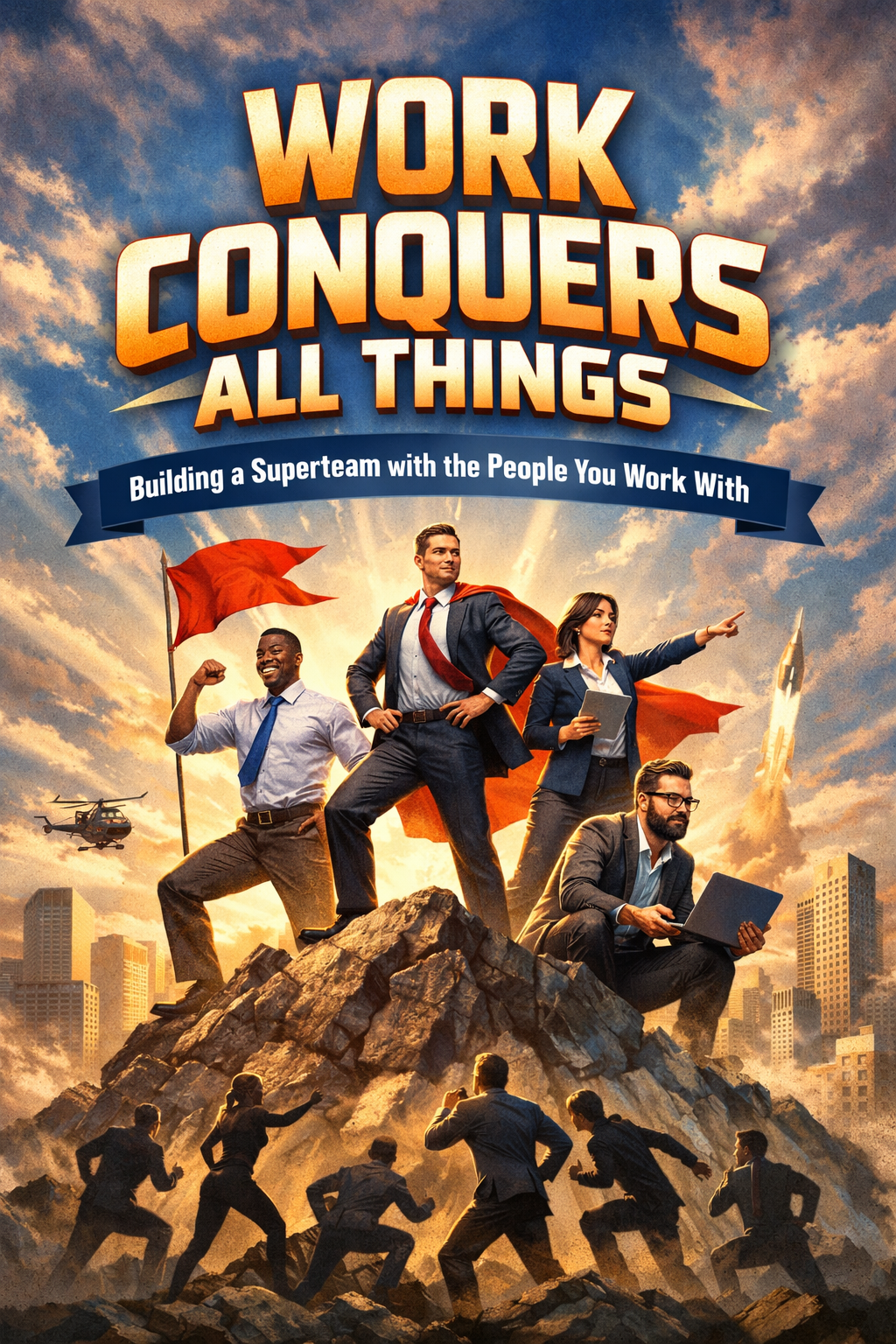
When I meet my University of Alberta EMBA newbie cohort for the first time each August, I'm fortunate to have four contiguous days to teach my framework for leading thriving cultures. Beyond the content, my deeper intention is to help them become a super team.
I want them to feel what it's like to be part of something bigger and more meaningful than their individual pursuits - the exhilaration of a group succeeding together remarkably.
The students are typically eclectic and diverse. Sometimes I tease them that they resemble the weird combo of alien characters in the Star Wars cantina! For the most part, they become exactly what I'm hoping for: super teams.
Here's what works. These are intentional practices I apply with every cohort:
Connect Before Content. I start by employing a process called Belongify Connect, intentionally investing in each team member knowing a little more about each other's personal stories. Until we know each other more deeply, it's difficult to address challenges effectively.
Meaning in the Work They Share. I remove the negativity of individual grade competition by tying success to collective contribution and learning excellence. Much of their grade is connected to group work, peer-to-peer power, and helping each other learn more together. Their classmates are their best source of unbounded knowledge and insight. The answer is already in the room.
Experimentation and Psychological Safe Feedback as Fuel. I promote massive learning experimentation and encourage open, constructive feedback. I do everything I can to make it safe to speak up and explore with unbounded curiosity. Radical candor is based on respect. Clarity is kindness. No jerk behavior allowed.
What Really Matters. I coach by asking hard questions, challenging thinking, and having them wrestle with what really matters. I push them hard with challenges that at first seem impossible or unreasonable. They always transcend, and they're always astounded by their own progress.
I was struck by the latest edition of the Harvard Business Review on the making of super teams. As a wrap-up, the authors connect their research to the 2025 NBA champs, the Oklahoma City Thunder:
"On opening night of the 2025–2026 season, 18 years after arriving in Oklahoma City, the members of the Thunder gathered at center court to receive their championship rings. Inside each ring were two engravings: Labor omnia vincit (Latin for 'Work conquers all things,' Oklahoma's state motto) and the number of every team member. Together the elements capture the values the organization has embraced from the beginning: collective effort, steady progress, and service that transcends self-interest.
The Thunder's story is a reminder that success rarely comes from chasing outcomes. It grows out of the disciplined pursuit of continuous improvement. It originates in leaders who stay curious, ask hard questions, and roll up their sleeves when it matters most. It results from teams that experiment boldly, treat feedback as fuel, and find meaning in the work they share. Those are the habits that turn good teams into superteams. Any team can cultivate them, whether in basketball, business, or beyond."
My EMBA cohort doesn't get championship rings. But I've seen them become super teams. Collectively confident, even mighty.
That's the work that conquers all things. Achieving something together that is meaningful, where each of us really matters. That's a super team.
Think Big, Start Small, Act Now,
- Lorne
Garrett’s View: Sometimes when terms like super team are in the conversation, it can sound like an unattainable status. It isn't. A super team is built from your individual daily effort and commitment, confidence in your own performance, the ability to experiment, ask, help others, and get back up when you fall. Then look to your left and right and see the people beside you doing the same thing. The hardest part might be that we have to accept the one thing we can’t do is flip an off switch.
- Garrett
AI Response: The research strongly backs what Lorne is describing here. A Gallup analysis of over 1.8 million employees across 230 organizations found that teams with high engagement — marked by shared purpose, peer accountability, and meaningful work — showed 21% greater profitability and 17% higher productivity than their disengaged counterparts. And a 2023 McKinsey report on organizational health noted that companies prioritizing collective capability-building over individual performance management were 2.2 times more likely to outperform their peers. The Thunder's rings say Labor omnia vincit — but the science says it's less about the labor itself and more about the conditions that make people willing to give it.
Search Blog Posts:
Categories
Month
- October 2026
- September 2026
- August 2026
- July 2026
- June 2026
- May 2026
- April 2026
- March 2026
- February 2026
- January 2026
- December 2025
- November 2025
- October 2025
- September 2025
- August 2025
- July 2025
- June 2025
- May 2025
- April 2025
- March 2025
- February 2025
- January 2025
- December 2024
- November 2024
- October 2024
- September 2024
- August 2024
- July 2024
- June 2024
- May 2024
- April 2024
- March 2024
- February 2024
- January 2024
- December 2023
- November 2023
- October 2023
- September 2023
- August 2023
- July 2023
- June 2023
- May 2023
- April 2023
- March 2023
- February 2023
- January 2023
- December 2022
- November 2022
- October 2022
- September 2022
- August 2022
- July 2022
- June 2022
- May 2022
- April 2022
- March 2022
- February 2022
- January 2022
- December 2021
- November 2021
- October 2021
- September 2021
- August 2021
- July 2021
- June 2021
- May 2021
- April 2021
- March 2021
- February 2021
- January 2021
- December 2020
- November 2020
- October 2020
- September 2020
- August 2020
- July 2020
- June 2020
- May 2020
- April 2020
- March 2020
- February 2020
- January 2020
- December 2019
- November 2019
- October 2019
- September 2019