
Funeral or Fun in the Workplace
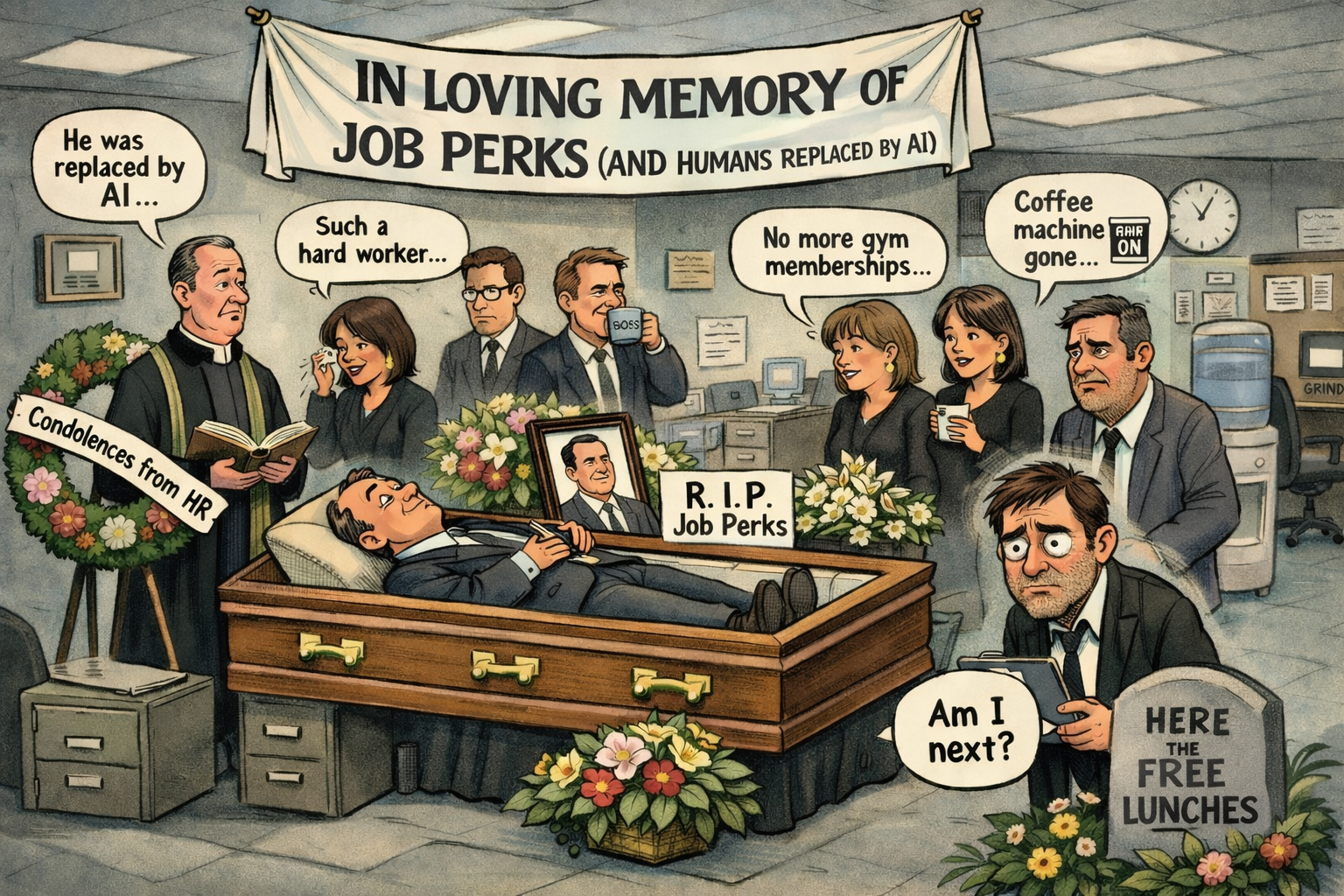
"Honestly, it feels like a funeral in the office right now."
That's from a recent Wall Street Journal piece on why work has become so joyless. The diagnosis: AI pressure and efficiency obsession have stripped the workplace of meaning and fun. Add in the geopolitical doom cloud, and you've got a pretty bleak backdrop.
The not-so-subtle message many employees are receiving: AI is going to replace most of you, so be grateful for what you have, and by the way, pay for your own coffee while the software on your laptop tracks your attendance.
Is there room for joy in this environment? There has to be.
Research shows employees who use AI heavily experience 45 percent more burnout, and AI initiative abandonment inside organizations has jumped from 17 percent to 42 percent . The deepest fear isn't job loss, it's losing a say.
What leaders can do:
Protect influence. Involve people in AI decisions rather than deploying systems around them. Psychological safety goes up when employees feel they have agency in how technology shapes their work.
Model fallibility. Host sessions where managers share their own early AI mistakes, what went wrong and what they learned. Most organizations say they want innovation but quietly punish failure. That contradiction kills culture.
Design for exploration, not compliance. Curiosity sessions and low-pressure experimentation build confidence through participation rather than mandate.
Question the efficiency math. Sometimes organizations chase line items that look costly on a spreadsheet but cost far more in morale. Charging employees for coffee while burning trust is just dumb.
What individuals can do:
Claim your creative territory. Judgment, storytelling, relationship-building, ethical reasoning, these are hardest to automate and most worth investing in.
Reframe your relationship with AI. Use it as a thinking partner rather than a task-executor. Experimenting with prompts and sharing surprising results turns a compliance exercise into creative problem-solving.
Protect human connection rituals. The coffee conversation, the hallway debrief, the team lunch. These aren't inefficiencies. They're the connective tissue of belonging. Don't let them get optimized away.
The underlying principle
Fun at work isn't frivolous. It's a signal that psychological safety and belonging are intact. When people feel safe enough to laugh, take a creative risk, or say "that was a bad idea, here's what I learned," that's exactly the culture that produces innovation and retention.
The organizations that will navigate this era well are the ones treating AI as a design challenge for human experience, not just an efficiency lever.
Funeral feelings are best suited for funerals.
Think Big, Start Small, Act Now,
- Lorne
Garrett’s View: Can we recognize our mindsets are contagious? We ought to be careful about the currency we lend to constant complaining. If we’re walking around the office, or existing in our virtual work worlds acting like everyday is a funeral, our burial is going to be welcomed a lot sooner.
- Garrett
AI Response: The data reinforces the urgency here. U.S. employee engagement fell to a 10-year low in 2024, with only 31% of employees engaged — matching figures last seen in 2014. Gallup On the flip side, 88% of engaged employees report finding joy in their work. Pumble The connection between fun and engagement isn't soft — a 2025 meta-analysis confirmed substantial overlap between workplace fun and work engagement, framing fun as a strategic element of social bonding essential for employee well-being and productivity. Taylor & Francis Online And the manager's role in all of this is outsized: Gallup research indicates that 70% of team engagement depends on the manager CAKE — which means the leader behaviors Lorne describes aren't nice-to-haves. They're the lever.
Search Blog Posts:
Categories
Month
- September 2026
- August 2026
- July 2026
- June 2026
- May 2026
- April 2026
- March 2026
- February 2026
- January 2026
- December 2025
- November 2025
- October 2025
- September 2025
- August 2025
- July 2025
- June 2025
- May 2025
- April 2025
- March 2025
- February 2025
- January 2025
- December 2024
- November 2024
- October 2024
- September 2024
- August 2024
- July 2024
- June 2024
- May 2024
- April 2024
- March 2024
- February 2024
- January 2024
- December 2023
- November 2023
- October 2023
- September 2023
- August 2023
- July 2023
- June 2023
- May 2023
- April 2023
- March 2023
- February 2023
- January 2023
- December 2022
- November 2022
- October 2022
- September 2022
- August 2022
- July 2022
- June 2022
- May 2022
- April 2022
- March 2022
- February 2022
- January 2022
- December 2021
- November 2021
- October 2021
- September 2021
- August 2021
- July 2021
- June 2021
- May 2021
- April 2021
- March 2021
- February 2021
- January 2021
- December 2020
- November 2020
- October 2020
- September 2020
- August 2020
- July 2020
- June 2020
- May 2020
- April 2020
- March 2020
- February 2020
- January 2020
- December 2019
- November 2019
- October 2019
- September 2019